
Log in or create a free Rosenverse account to watch this video.
Log in Create free account100s of community videos are available to free members. Conference talks are generally available to Gold members.
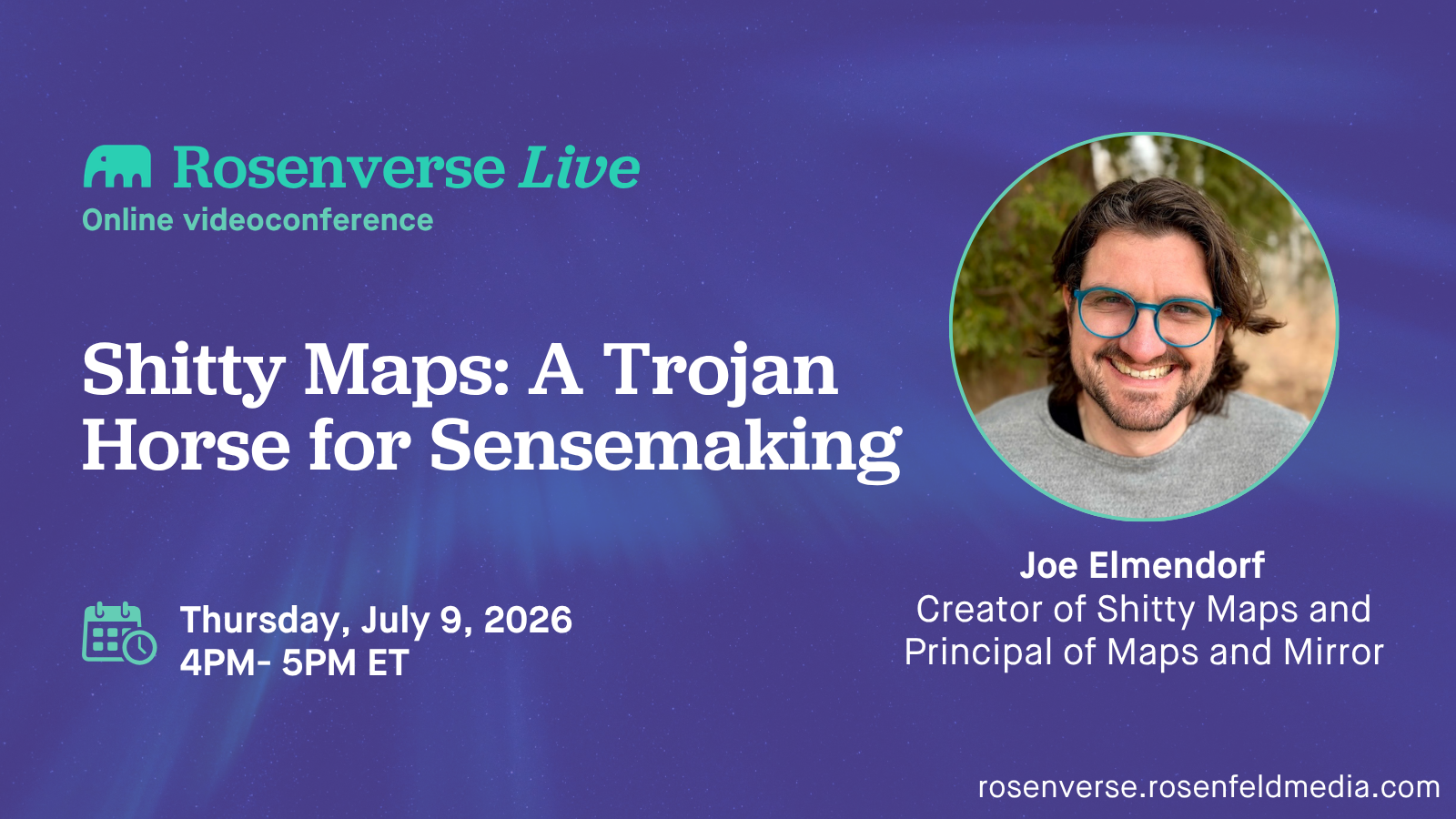
Shitty Maps: A Trojan Horse for Sensemaking
This video is featured in the Learning playlist and 1 more.

Summary
This session is about not doing that anymore.
Polish is a trap. A finished-looking map either gets waved through—it looks done, so it must be right–or the room balks because they weren’t part of figuring it out. Either way, your map is treated as something fixed, and the thinking stops. The rough version doesn’t have that problem. It stays in motion. It invites the room in. And it’s faster than the “real” tools, which only feel fast because they look legitimate while you’re using them.
We’ll dig into why looking shitty works, then practice making rough maps together, and the skill behind the practice that makes the whole thing come together.
Key Insights
-
•
Rough, low-fidelity 's****y maps' reduce social risk and invite collaborative iteration rather than confrontation.
-
•
Visual representations persist in conversation, help point to relationships, and map non-linear concepts better than spoken language.
-
•
Power dynamics and inadequate communication mediums often inhibit people from sharing valuable perspectives in meetings.
-
•
Practicing real-time visual thinking with simple tools like note cards builds muscle memory that helps break conversational stalemates.
-
•
'S****y maps' serve as Trojan horses that sneak clarity into conversations without requiring permission or pretense.
-
•
The posture of presenting rough maps as drafts with invitation to correction reduces ego and resistance in group settings.
-
•
High-fidelity polished designs can shut down discussion by implying settled ideas, whereas rough sketches encourage exploration.
-
•
Visual sense-making is a powerful tool for sense-making, trust-building, and aligning stakeholders beyond verbal explanations.
-
•
AI-generated visualizations can augment conversation but often lack the human vulnerability and fluidity of hand-drawn sketches.
-
•
Breaking down complex problems into smaller chunks visually helps transform overwhelming issues into manageable tasks.
Notable Quotes
"Everything that I make looks s****y. How can I turn this into a benefit?"
"The map on the note card wasn’t calling anyone out. It was providing this shared point of reference."
"If something looks rough, people don’t treat it like a declaration. They treat it like a draft."
"Talking is linear, but systems are non-linear. Visual maps show those relationships that words can’t."
"I didn’t magically have crystal-clear thoughts. I changed the conditions just enough."
"S****y maps are a Trojan horse for sense-making because they’re disarming and inviting."
"The willingness to say, ‘I’m not sure this is right, but is this what we’re talking about?’ That is a s****y map."
"Visual sketching shows human vulnerability in a way that AI cannot."
"High-fidelity maps often squash discussion. Rough maps invite it."
"That pen on paper helps your brain think through ideas faster."
Or choose a question:
















More Videos

"An elite athlete doesn’t turn up at the Olympics and do their thing without coaches, physios, nutritionists."
Dr. Karl JeffriesThe Science of Creativity for DesignOps
January 8, 2024

"We use Alexa’s personification for good, fun, and delight, but we don’t advertise, especially because there may be kids listening."
Amy MarquezINVEST: Discussion
June 15, 2018

"Visualizing data in a way executives can interpret is key to shifting from I think to I know."
Steve Portigal Chris Chapo Kelly Goto Christian RohrerDiscussion
May 13, 2015

"Some needs proved full-time, so hybrid staffing models are often short term or mixed part-time."
Alicia MootyDesign Staffing Models
September 30, 2021

"We want to stay in the game no users cursing our name."
Ana Maria Montero Barrantes Aditi Dhar Michelle Kaplan Nate Osborne Matt LaurenceThe Authentic UX Talent Show
January 8, 2024

"The ultimate measure is bringing value so people invite you back to work with them again and again."
Lada Gorlenko Sharbani Dhar Sébastien Malo Rob Mitzel Ivana Ng Michal Anne RogondinoTheme 1: Discussion
January 8, 2024

"Choosing a research repository is a big battle in your organization; the right decisions can really help you succeed."
Sofia QuinteroThe Product Philosophy Behind EnjoyHQ
March 10, 2021

"Please don’t chop off that engine until the new one is built because you are not the only one on this plane."
Laura KleinUnique challenges of innovation in enterprises
April 23, 2020

"Marketing is an essential collaborator because they help package and communicate insights organization-wide."
Andrew MichaelBuilding a Product Insights Team
March 10, 2022













