
Log in or create a free Rosenverse account to watch this video.
Log in Create free account100s of community videos are available to free members. Conference talks are generally available to Gold members.
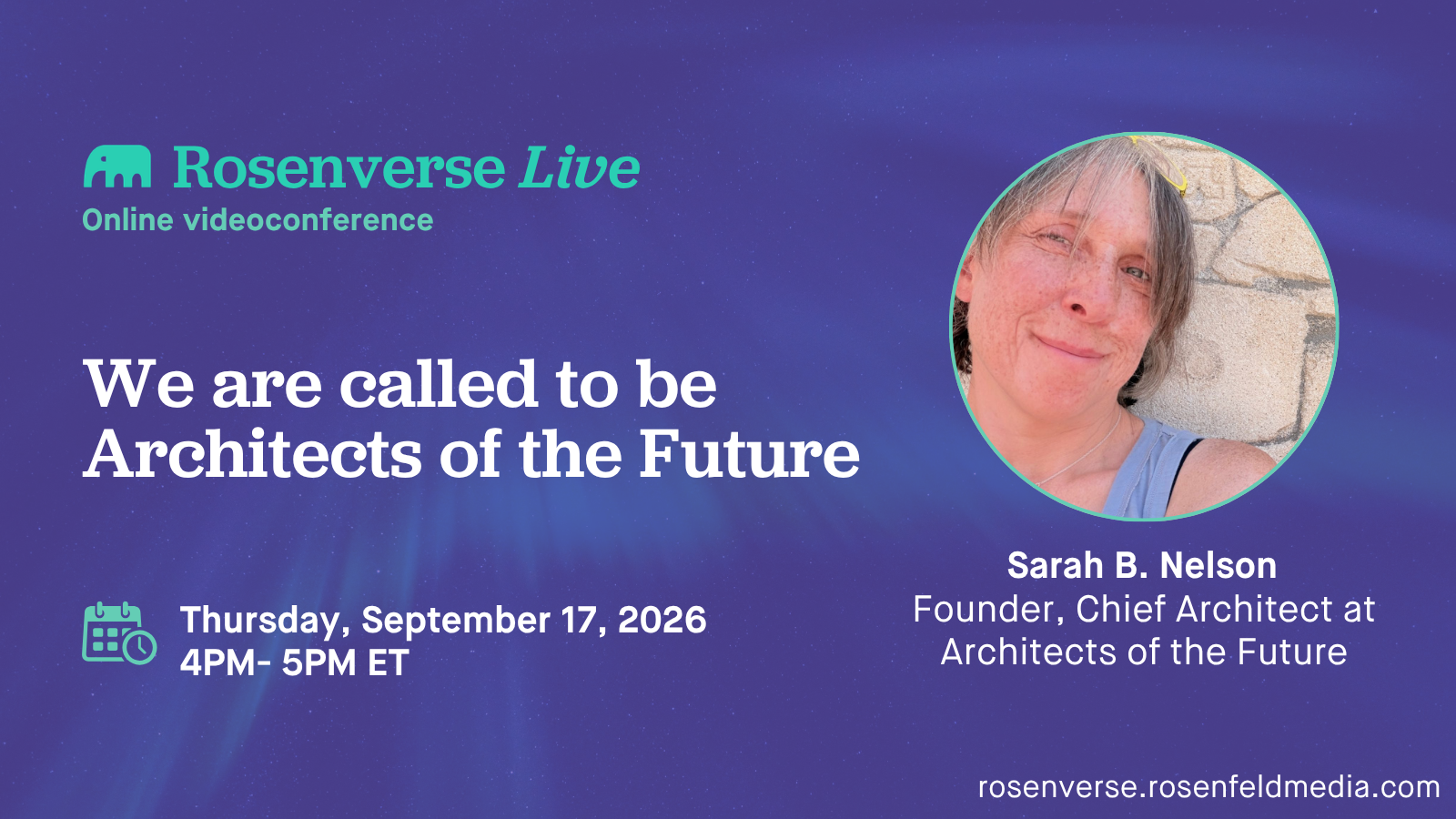
We are called to be Architects of the Future
This video is featured in the UX Watch Party playlist.
Summary
Key Insights
-
•
Sarah’s early artistic identity influenced her lifelong interest in human-computer creative relationships, from generative music to AI art.
-
•
Disillusionment with corporate bureaucracy and stifling organizational systems can drive experienced designers to pivot careers toward creative authenticity.
-
•
Resilience for design professionals requires carving out moments of self-connection and reflection amidst fast-paced, delivery-driven work environments.
-
•
Human imagination and creativity remain fundamental differentiators from AI, making them vital skills for designers to nurture.
-
•
Sarah’s Neural Transmission System experiment flips AI-human interaction by having AI send messages she interprets artistically, revealing new creative dynamics.
-
•
Large organizations often struggle with procurement and cultural inertia, requiring tenacity and political navigation from design leaders.
-
•
There is a growing fatigue with AI-generated generic content, which may increase demand for authentic, human-driven creative services.
-
•
In-person collaboration is regaining value post-pandemic as essential for connection and creative energy that virtual tools often lack.
-
•
The design community is grappling with existential questions about agency, the future of work, and maintaining humanity in technology-driven fields.
-
•
Supporting others through leadership means balancing authenticity, corporate politics, emotional safety, and ongoing advocacy for creative teams.
Notable Quotes
"When did I become the person where things are impossible? We did that. We tried it."
"AI is so incredibly persuasive; you have to be super mindful and present with it."
"Creative people are needed in this time, and it’s important to listen to that little loud voice and give it space."
"I’m following breadcrumbs, weak signals—in conversations with people I respect to find new paths."
"Designers live in disappointed dreams a lot—seeing what’s possible but drowning in the garbage in the way."
"I’m going to go over here and get shot in the face so that the team has what they need."
"There’s going to be a desire for AI-free boutique companies not very far away."
"We have an enormous amount of power together as groups of people to steer our futures."
"Authenticity in leadership is about creating safe spaces but also knowing when to say unpopular things."
"The only hopeful bits in 1984 are the moments when he’s out in the field or with another person; that’s what we’ve got."
Or choose a question:
















More Videos

"An elite athlete doesn’t turn up at the Olympics and do their thing without coaches, physios, nutritionists."
Dr. Karl JeffriesThe Science of Creativity for DesignOps
January 8, 2024

"Find your senior executive ally who understands design and go talk to them first — it works."
Amy MarquezINVEST: Discussion
June 15, 2018

"Both tribes really believe in doing awesome for customers, that’s our common ground."
Steve Portigal Chris Chapo Kelly Goto Christian RohrerDiscussion
May 13, 2015

"Splitting people’s allocation across different teams created work-life balance issues requiring more oversight."
Alicia MootyDesign Staffing Models
September 30, 2021

"Puppetry lets you communicate like, I don’t like what you said, how come you said that to me."
Ana Maria Montero Barrantes Aditi Dhar Michelle Kaplan Nate Osborne Matt LaurenceThe Authentic UX Talent Show
January 8, 2024

"We never compromise on the business goals, but how we achieve them can be flexible and pragmatic."
Lada Gorlenko Sharbani Dhar Sébastien Malo Rob Mitzel Ivana Ng Michal Anne RogondinoTheme 1: Discussion
January 8, 2024

"Most organizations don’t have one research tool, but a mix, so openness and integration are essential."
Sofia QuinteroThe Product Philosophy Behind EnjoyHQ
March 10, 2021

"The incentive structure at a big company is set up to reward people for entirely different stuff than innovation requires."
Laura KleinUnique challenges of innovation in enterprises
April 23, 2020

"Embedded squads build domain expertise but risk losing knowledge if someone leaves, while centralized teams help reduce duplicated effort."
Andrew MichaelBuilding a Product Insights Team
March 10, 2022













