
Research as a Catalyst for Organizational Transformation
Summary
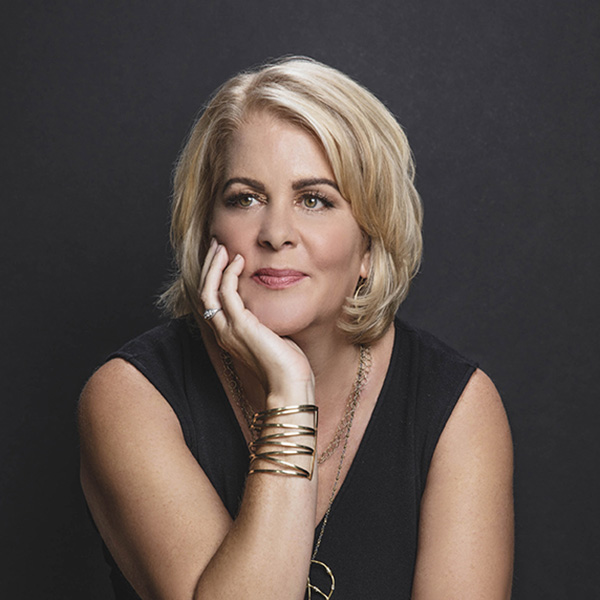
Robin, with a background in organizational psychology and a focus on diversity, equity, and inclusion, draws on her experiences in South Africa and the concept of Ubuntu to emphasize interconnectedness in business transformation. She critiques legacy industrial-era assumptions and Milton Friedman's shareholder primacy view, highlighting a shift toward ecosystem stakeholder capitalism endorsed by CEOs like Mark Benioff and Larry Fink. Robin argues that researchers have unique superpowers: learning through deep listening and empathy, connecting by breaking organizational silos, and generating actionable insights to influence strategy, structure, processes, rewards, and culture. She illustrates these with Wells Fargo case studies, such as simplifying financial tools, redesigning merchant services applications, digitizing SBA applications, and confronting cultural issues exposed by the Wells Fargo sales scandal. Robin stresses that organizational change demands navigating resistance and culture with both research craftsmanship and organizational consulting skills. She encourages researchers to take their seats at the decision-making table, as research remains the most predictive organizational practice in a volatile, uncertain, complex, and ambiguous (VUCA) world.
Key Insights
-
•
The African philosophy of Ubuntu (‘I am because we are’) offers a powerful lens for human-centered research emphasizing interdependence rather than rugged individualism.
-
•
Despite living in a volatile and complex world, many organizations still operate with outdated, industrial-era assumptions that hinder adaptability.
-
•
The 2019 Business Roundtable redefinition signals a major shift from shareholder primacy to stakeholder ecosystem capitalism, focusing on benefiting all stakeholders.
-
•
Researchers hold unique 'superpowers' to drive transformation: learning through deep empathy, connecting cross-functional teams, and generating actionable insights for change.
-
•
Turning the research lens internally on organizational assumptions ('in here') as well as externally on customers ('out there') enables alignment and meaningful transformation.
-
•
Research acts as a silo-busting platform, fostering cross-disciplinary conversations that rarely happen otherwise but are essential for customer-centricity.
-
•
Experiential significance is a felt recognition within research data that identifies truly critical issues demanding organizational attention.
-
•
Organizational levers including strategy, structure, process, rewards, and culture must all be considered and can be tripped by research insights for effective change.
-
•
Cultural challenges, such as the sales vs. service divide at Wells Fargo, reveal the difficulty of acting on research findings when they confront entrenched mindsets.
-
•
Researchers need organizational consulting skills, including facilitation and managing resistance, beyond traditional research craft to effect systemic change.
Notable Quotes
"Ubuntu means I am because we are — we don’t really know our own humaneness unless it’s in relationship to other people."
"We’re still operating from an industrial era hangover — a mechanistic way of problem solving that doesn’t fit today’s complexity."
"The Business Roundtable radically redefined the purpose of a corporation — it’s to promote an economy that serves all Americans, not just shareholders."
"Researchers have superpowers: deep listening, empathy, making connections, synthesis — capabilities everyone in business needs today."
"Turning the research lens on both the ‘in here’ organization and the ‘out there’ customer reality helps reveal misalignments and opportunities."
"Research is inherently a silo-busting activity because customers experience the whole, not just parts divided by departments."
"Experiential significance is that moment in research when something just hits you as really important and impossible to ignore."
"In the application process for merchant services, underwriting’s risk-first mindset conflicted with customer needs, causing friction."
"There is no quick fix to culture — the sales versus service divide at Wells Fargo was a cultural issue that required bravery to address."
"Research really is the most predictive practice an organization has — we are the only ones who can really predict the future."
Or choose a question:














More Videos

"Are you creative? Such a loaded question, isn't it?"
Dr. Karl JeffriesThe Science of Creativity for DesignOps
January 8, 2024

"I never want to walk into a review with my stakeholders at the SVP level and see something for the first time."
Amy MarquezINVEST: Discussion
June 15, 2018

"The core of it is really putting yourself in that other person’s shoes—it’s basic but essential empathy."
Steve Portigal Chris Chapo Kelly Goto Christian RohrerDiscussion
May 13, 2015

"Splitting people’s allocation across different teams created work-life balance issues requiring more oversight."
Alicia MootyDesign Staffing Models
September 30, 2021

"We want to stay in the game no users cursing our name."
Ana Maria Montero Barrantes Aditi Dhar Michelle Kaplan Nate Osborne Matt LaurenceThe Authentic UX Talent Show
January 8, 2024

"Simply asking stakeholders what success looks like for them in a project is a powerful way to start meaningful conversations."
Lada Gorlenko Sharbani Dhar Sébastien Malo Rob Mitzel Ivana Ng Michal Anne RogondinoTheme 1: Discussion
January 8, 2024

"Our principle is that whatever we build must help researchers avoid becoming a silo."
Sofia QuinteroThe Product Philosophy Behind EnjoyHQ
March 10, 2021

"Large companies demand certainty, but certainty is the opposite of innovation."
Laura KleinUnique challenges of innovation in enterprises
April 23, 2020

"You’ve got to take control of the backlog and position your team as value-driven, not just servicing individual teams."
Andrew MichaelBuilding a Product Insights Team
March 10, 2022













