Log in or create a free Rosenverse account to watch this video.
Log in Create free account100s of community videos are available to free members. Conference talks are generally available to Gold members.
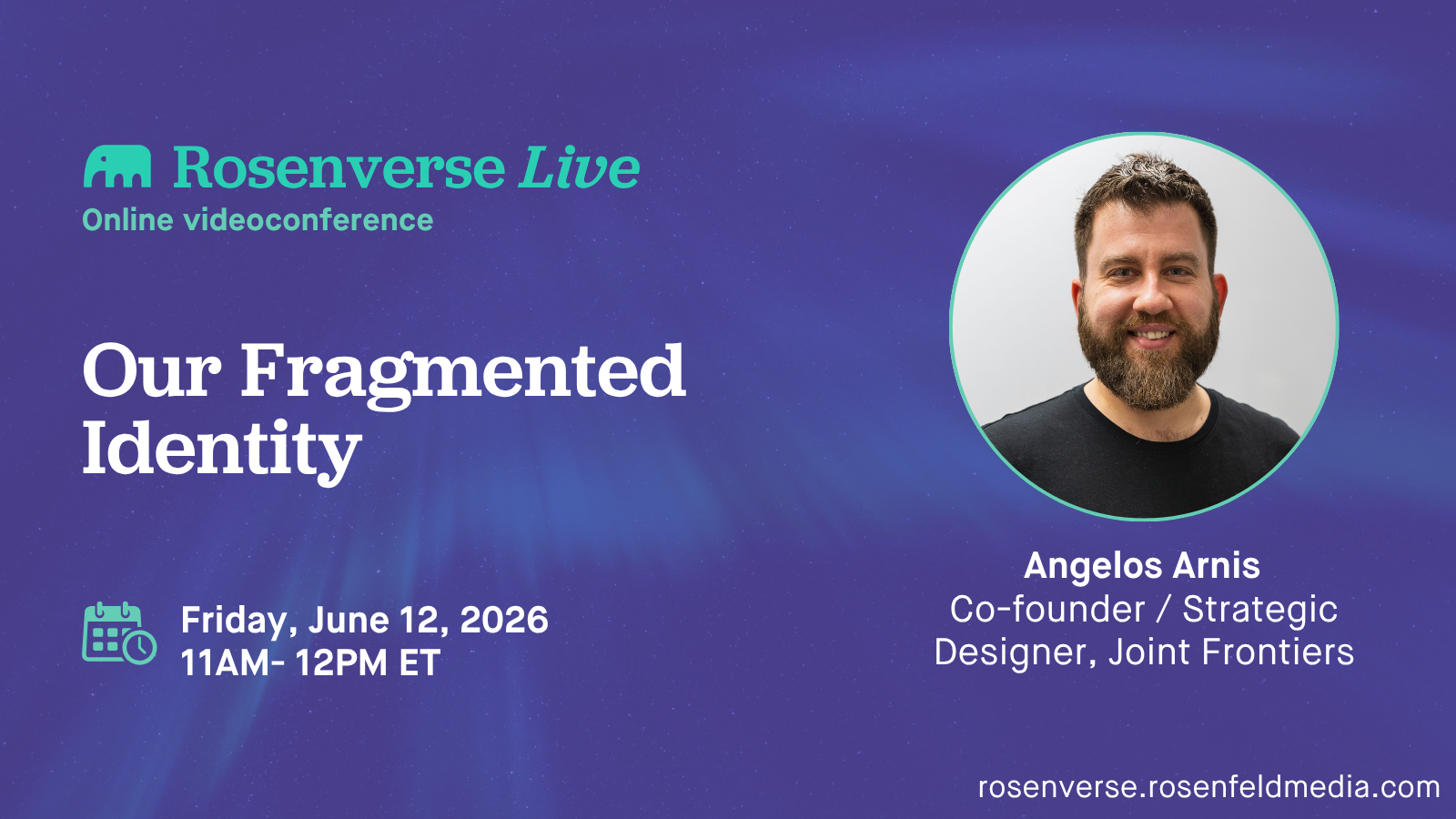
Our Fragmented Identity

Summary
Key Insights
-
•
Designers are haunted by a lost critical design tradition and a canceled future of professional autonomy, causing widespread professional vertigo.
-
•
The collapse of IDEO’s visibility marks a crisis in design's identity, erasing a space that gave legitimacy to design thinking.
-
•
Design thinking became a performative business spectacle, systematically evacuating meaningful content while generating feelings of purpose.
-
•
The profession functions as an identity container amid broader social atomization, making design roles deeply tied to personal coherence.
-
•
Post-2022 layoffs and 'return to craft' trends signal narrowing designer roles to execution, reducing strategic judgment and increasing vulnerability to cuts.
-
•
AI tools currently intensify workload and cognitive demand, fragmenting attention and eroding restorative time rather than reducing it.
-
•
Junior designers now primarily review AI outputs instead of developing judgment through iterative creation, undermining skill formation.
-
•
AI produces superficially competent outputs but lacks genuine understanding or commitment to system realities, lacking the political traction of human designers.
-
•
Design lacks self-governing institutions like licensing or unions, leaving professionals dependent on unstable corporate frameworks.
-
•
Despite exhaustion and anxiety, designers uniquely possess forward-directed imagination that AI cannot replicate, offering a basis for collective renewal.
Notable Quotes
"Time is out of time—the present is broken because the past remains unresolved and futures once promised have been withdrawn."
"Design thinking became a theater, a spectacle that generated feeling of meaningful work while systematically evacuating its content."
"The designer is not describing a profession, but naming the one remaining place where their sense of self holds together."
"AI is fluent without standing; it never says this will not work, it never pushes back on the company."
"Every instruction to adapt assumes the variable is you and the institution stays fixed."
"The vessel for expanded work is your body—your nervous system pays the cost of fractured attention and workload."
"Focused, uninterrupted work is declining across every sector where AI tools are adopted."
"AI cannot extrapolate futures that have no precedent; it only recombines patterns from existing data."
"Professional autonomy was constructed through self-governing institutions; design skipped that step."
"Your continued feeling of precarity is the point; the system requires your continuous adaptation as a source of labor."
Or choose a question:















More Videos

"Half-day Fridays is a way for us to give back to ourselves and promote work-life balance."
Jen Crim Jess Quittner Saritha Kattekola Alex Karr Gurbani PahwaCulture, DIBS & Recruiting
June 11, 2021

"Steve Jobs’ product matrix simplified Apple’s sprawling portfolio and refocused their efforts, which arguably saved the company."
Jorge ArangoMeeting of the Waters: Designing for Successful Inorganic Growth
August 12, 2021

"If you want your question asked, please put it in the Slack channel, because I cannot keep up with the rapid things happening live."
Bria Alexander Louis RosenfeldOpening Remarks Day 1
March 25, 2024

"If we improve areas of friction on behalf of the design department, people’s ability to achieve goals will increase."
Jacqui FreyFlow and Superfluidity for Design Orgs
November 7, 2018

"The best way to build a fully accessible foundation is to involve the voices of people with disabilities at every step."
Sam ProulxPrototype Reviews, People With Disabilities, and You
December 8, 2021

"We want AI to augment human skills like an electric bike, not replace them like a robotic vacuum cleaner."
Sheryl Cababa Ethan Marcotte Milena PribicDay 2 Panel
June 5, 2024

"Too often research is something we do to people, but participatory research invites participants as co-creators of knowledge."
Nidhi Singh Rathore Amber DavisEmbracing participation to unlock deeper truths in commercial research
March 12, 2025

"Design review is simply the act of designers collaborating to increase quality and craft."
Erika Kincaid Brenna Heaps Jessica TsukimuraConnecting the Dots: How to Foster Collaboration and Build a Strong Design Review Culture
June 8, 2022

"The more that you can get context out of the backend and into a place you control, the easier it is to work with AI."
Christian Crumlish Erika Flowers Benjamin Jackson Adekunle OduyeFrom tools to staff: What the next generation of agents means for the future of design
June 10, 2026