Log in or create a free Rosenverse account to watch this video.
Log in Create free account100s of community videos are available to free members. Conference talks are generally available to Gold members.
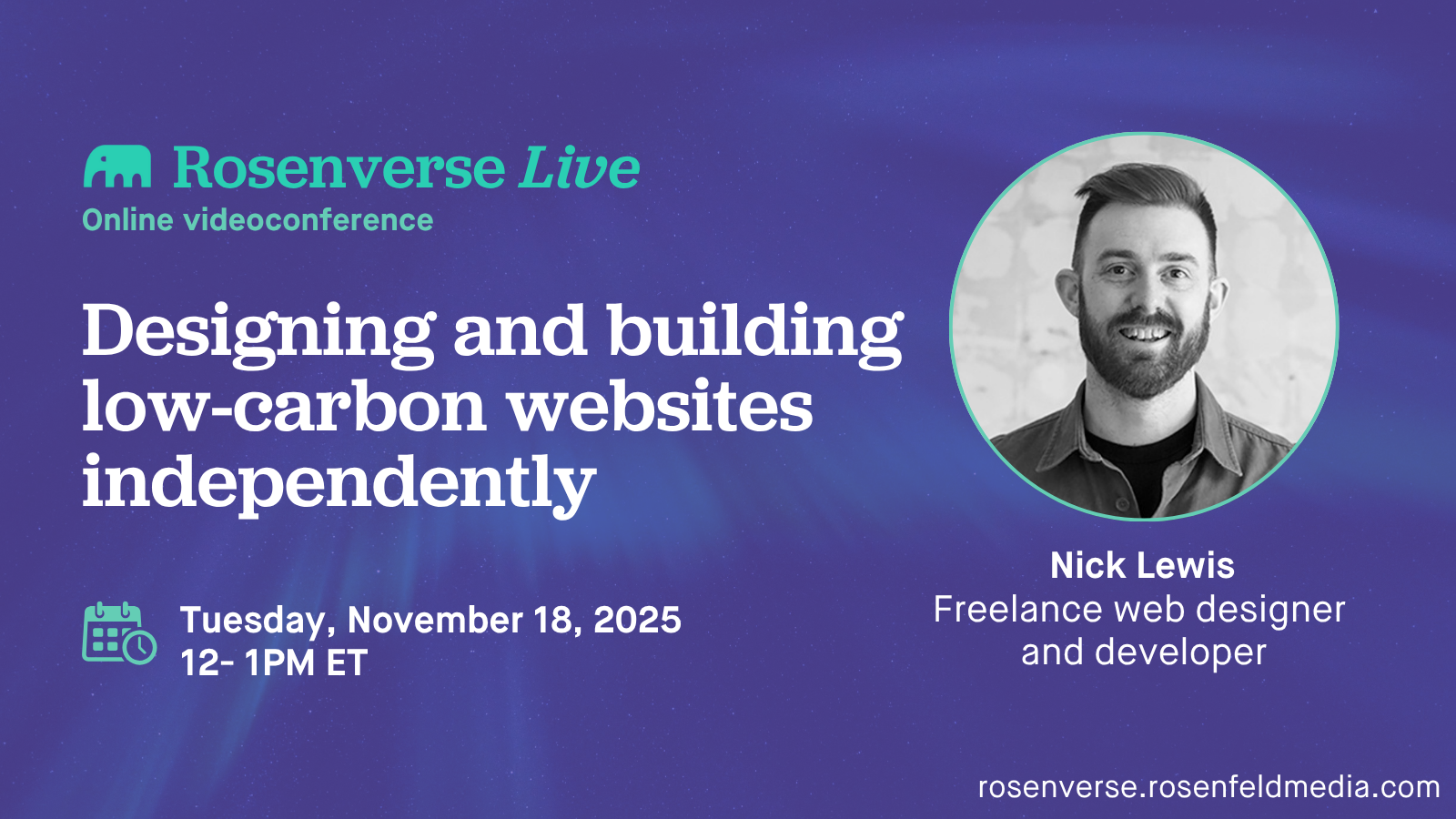
Designing and building low-carbon websites independently

Summary
What are low-carbon websites and what do they look like in practice? In this conversation, we will talk about creativity within the constraints, how to navigate client conversations when they want resource-heavy designs and how to think about your project’s carbon budget. As a bonus, we’ll get sneak peeks on what happens behind the scenes of a curation site of over 270 low carbon sites and why some of them get removed over time.
Key Insights
-
•
Nick Lewis entered digital sustainability motivated by personal outdoor experiences highlighting climate impact.
-
•
Around 2017, digital sustainability resources were limited, sparking Nick’s self-driven research and experimentation.
-
•
Working in traditional creative agencies, Nick found tension between flashy, heavy designs and sustainable/performance goals.
-
•
Transitioning to agencies with sustainability core values and then freelancing allowed Nick to work with more aligned clients.
-
•
Low carbon web design involves optimizing everything from typography and color choices to reducing unnecessary animations and videos.
-
•
Creative constraints in sustainable design often inspire innovative solutions rather than limiting creativity.
-
•
The Low Carbon Showcase website enforces a strict review process but has removed about 70 previously included sites as their sustainability regressed.
-
•
Most performance and sustainability issues on websites come from heavy videos, large images, excessive JavaScript, and multiple font files.
-
•
Nick is critical of generative AI in creative fields, viewing it as uncreative and energy-wasteful, but sees other AI applications as valuable.
-
•
Nick developed a Figma plugin prototype to help designers identify sustainability issues early in the design process without disrupting workflow.
Notable Quotes
"When I started out, I knew nothing about digital sustainability."
"Designing sustainable doesn’t mean removing everything fun from the web."
"Creative constraints can actually bring out the most creative solutions."
"Clients often want flashy autoplay video even though it negatively impacts performance and sustainability."
"About 70 sites have been removed from the Low Carbon Showcase after regressing in sustainability."
"Most heavy website performance issues come from videos, images, JavaScript, and fonts."
"Generative AI is not creative; it’s just pattern finding and recycling what’s been done before."
"Using generative AI for design risks losing the human creativity that makes design special."
"Be curious, keep learning, and believe you can make a difference in sustainability."
"The Climate Dictionary was built in a couple hours over a weekend, focused on function over form."
Or choose a question:













More Videos

"In a large organization, processes must become more centralized and rigid to scale, though flexibility and team needs still matter."
Sarah Sgarlato Pierini Kevin NewtonFrom Passion to Execution: A Story of Evolving Research Maturity at LinkedIn
September 9, 2022

"There wasn't much attention paid to onboarding team members—not the clients or users, but the actual team."
Tanya SnookDesigning the team experience: Building culture through onboarding
November 4, 2021

"Triangulate, triangulate, triangulate — use multiple data sources and secondary research to build robust insights."
Megan Blocker Marieke McCloskey Renee ReidPositioning insight: Structuring teams, roles and careers for a changing research landscape
March 13, 2025

"Friction can be good, especially when protecting private information."
Ron BronsonDesign, Consequences & Everyday Life
November 18, 2022

"It's not about looking under the hood of the model, but about what data goes into the hood that you can influence."
Ovetta SampsonResearch in the Automated Future
March 11, 2022

"You might be thinking about accessibility backwards; start with mobile first, then extend to desktop."
Sam ProulxMobile Accessibility: Why Moving Accessibility Beyond the Desktop is Critical in a Mobile-first World
September 8, 2022

"If you’re invited to some meetings and not others, it makes all the difference."
Andy Polaine Lavrans LøvlieWhat is the role of service design in product-led organizations?
December 3, 2024

"Product folks face challenges translating clear founder or business goals down to motivating operational teams."
Christian Crumlish Aditi Ruiz Johanna Kollmann Catt SmallMorning Insights Panel
December 6, 2022

"The pandemic track was the I told you so moment for those of us designing remote tools since 2006."
Lada GorlenkoTheme 2 Intro
June 9, 2022