Log in or create a free Rosenverse account to watch this video.
Log in Create free account100s of community videos are available to free members. Conference talks are generally available to Gold members.
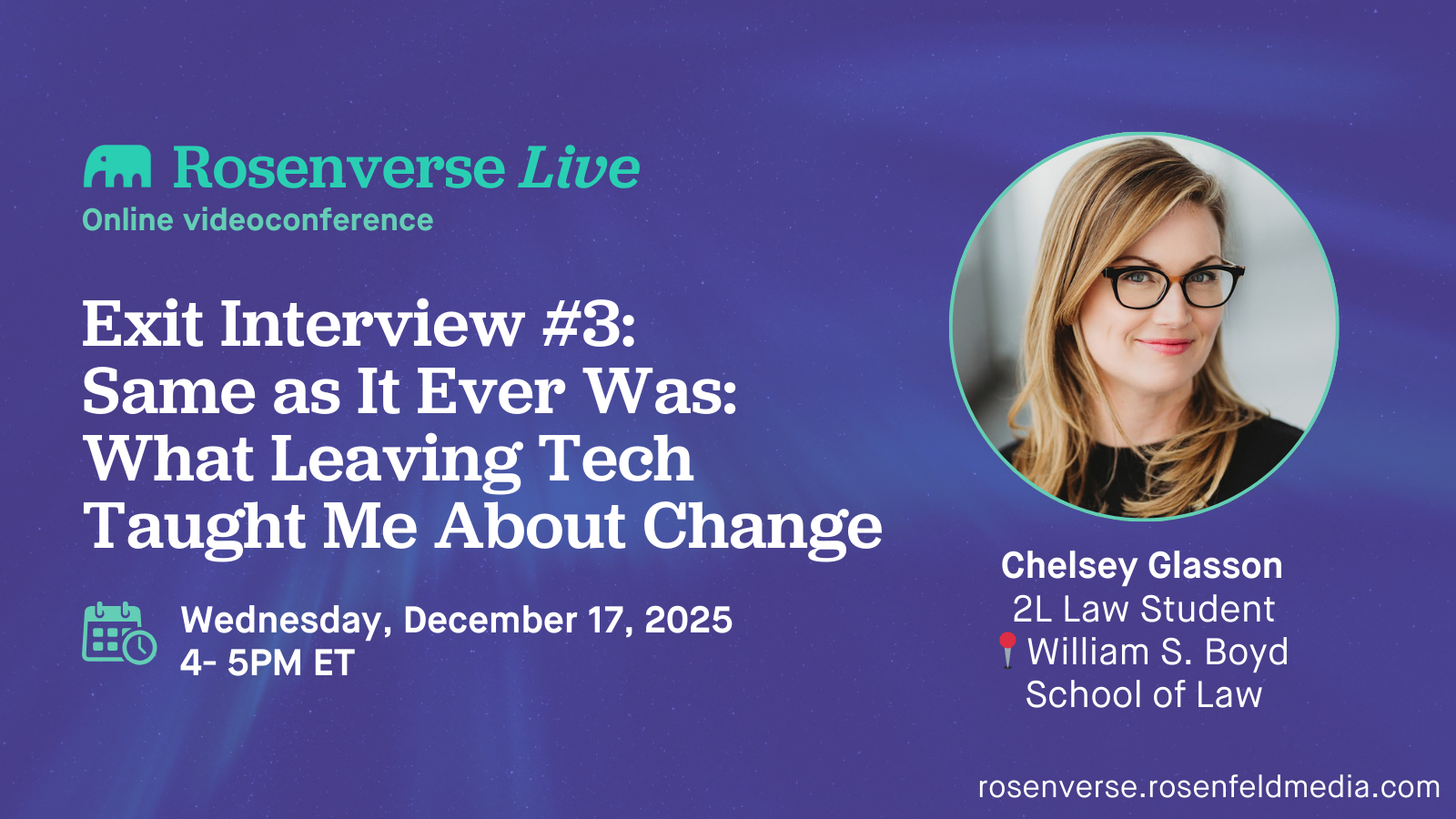
Exit Interview #3: Same as It Ever Was: What Leaving Tech Taught Me About Change
This video is featured in the Learning playlist and 1 more.

Summary
After more than a decade of exploring the world as a user experience researcher, I found myself at a crossroads: continue in a traditional user research role or venture into something new. I chose the latter. Today I’m in the early stages of a legal career, having just wrapped up my second year of law school. Remembering how scary it initially felt to even consider a career pivot, I’m excited to share why I made a change, some of the humbling and sometimes funny moments along the way, and how the skills I developed in UX continue to set me up for success today. Whether you’re contemplating a transition of your own or just curious about what a non-traditional UX-to-something-else journey can look like, I hope my story offers insight, encouragement, and a bit of validation for wherever you are on your career path. And if you're considering a change, please know you’re not alone. There’s a whole community of us out here, cheering you on and excited to provide insight and empathy.
Key Insights
-
•
Many UX professionals come from diverse, tangible job backgrounds before entering tech.
-
•
Chelsea Glasson's transition from UX to law was inspired by her pregnancy discrimination memoir project.
-
•
The law school’s modern client-centered approach closely parallels the UX research and design process.
-
•
Tech’s performance calibration cycles promote short-term focus and gamified competition rather than long-term career vision.
-
•
Ageism and early exits for women (average age 35) in tech contrast with law, where experience and age are more valued.
-
•
Leaving tech often means rebuilding networks and confronting imposter syndrome, but framing it as a research project helps.
-
•
Shifting industries can feel like starting over but leveraging UX skills enables smoother transitions.
-
•
Financial and family pressures strongly affect decisions to stay or leave the tech industry.
-
•
Burnout and systemic biases in tech create openings for career pivots into adjacent fields like law or policy.
-
•
A career can be viewed as a marathon with scenic detours rather than a single linear sprint.
Notable Quotes
"My last job outside this field was as a furniture salesman — flipping burgers or wrangling children, many started outside tech."
"That holiday party in Medina was eye-opening—tech execs talking about vacation homes, and I thought, I want that world."
"The six-month calibration cycle in tech gamifies performance but discourages a long-term vision for career longevity."
"Legal careers value experience and credibility more as you age, unlike tech where ageism is prevalent."
"Writing my book was just another UX research project synthesizing my career and leading me toward law."
"My law professor outlined the modern legal process as UX: listening, researching, co-creating solutions with clients."
"Moving into law felt like starting over, but reframing it as a UX challenge made it manageable."
"Leaving tech meant rebuilding my social and professional networks outside the industry, which took time and courage."
"I sold my Seattle house and downsized in Spokane to manage financial pressures during this transition."
"Working in tech was a scenic detour on a long-term career marathon, with more detours ahead but now I have the tools to navigate them."
Or choose a question:
















More Videos

"Radical participatory design is some of the hardest work I have ever done; it takes more than intention, it takes significant care and time."
Rachael Dietkus, LCSWTrauma-Responsive Design: Reimagining the Future of Design Now
December 10, 2021

"If a message in Slack from years ago is doing part of the job of the design system, then it’s part of the design system AI will often miss."
Robin CannonAI means your design system can't suck anymore
September 9, 2026

"Grandmas provide grounding, resilience, and long-term perspective often through rituals and storytelling."
Gina MendoliaTherapists, Coaches, and Grandmas: Techniques for Service Design in Complex Systems
December 3, 2024

"Screen curtain blanks the screen for privacy and battery life, so no one can look over my shoulder."
Sam ProulxUnderstanding Screen Readers on Mobile: How And Why to Learn from Native Users
October 2, 2023

"Our first day’s theme is around establishing and growing design operations."
Bria AlexanderOpening Remarks
September 29, 2021

"This client project is very deliberate and explicit in focusing on culture and values."
Stephen PollardClosing Keynote: Getting giants to dance - what can we learn from designing large and complex public infrastructure?
November 7, 2017

"We don’t want to list every single customer activity; we need to abstract behavior patterns to manage interruptions."
Cheryl PlatzDemystifying Multimodal Design: The Design Practice You Didn't Know You're Doing
April 4, 2024
"For screen reader users, you often need to build entirely new prototypes using systems like Microsoft Word or Google Docs to convey semantic information."
Sam ProulxPrototype Reviews, People With Disabilities, and You
October 1, 2021

"Sometimes the fires need to burn; saying no today doesn’t mean you can’t solve it down the line."
Dominique WardThe Most Exciting Time for DesignOps is Now
September 8, 2022