
Log in or create a free Rosenverse account to watch this video.
Log in Create free account100s of community videos are available to free members. Conference talks are generally available to Gold members.
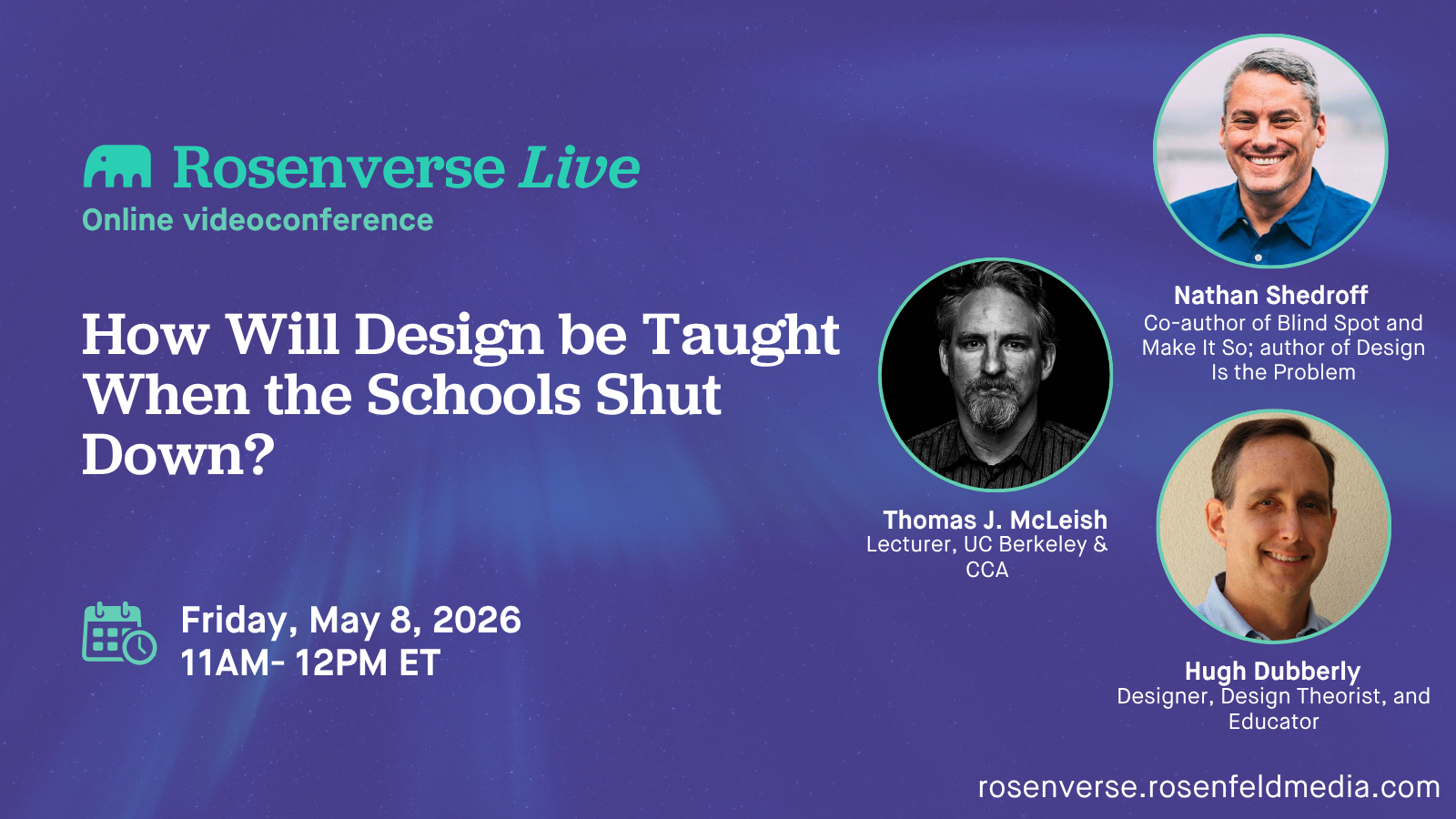
How Will Design be Taught When the Schools Shut Down?
This video is featured in the Future of Design playlist.


Summary
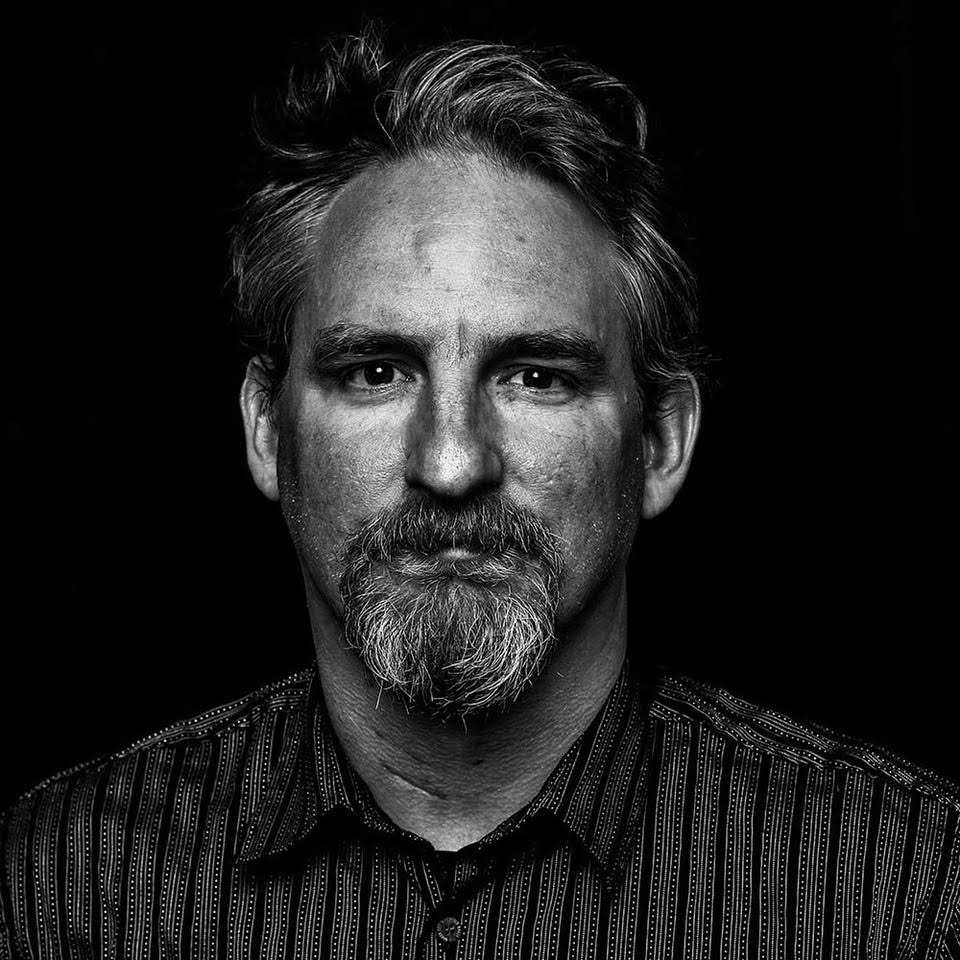
Design schools are collapsing—literally. When institutions like California College of the Arts close after more than a century, it’s clear our old model of design education can’t survive economic pressure, tech disruption, or outdated ideas about what “training” should be. So what comes next? Nathan Shedroff, Thomas J. McLeish, and Hugh Dubberly will lead an exploration of what might replace the design school as we know it: apprenticeships, corporate academies, AI mentors, decentralized credentialing—and models no one’s tried (yet). It’s not just about how designers will learn, but who gets to define what education means in the future.
Key Insights
-
•
Design and higher education face severe economic and enrollment crises exacerbated by demographic shifts and political pressures, threatening many independent colleges.
-
•
Traditional admission processes may be replaced by universal acceptance combined with personalized learning journeys guided by free and validated educational content.
-
•
AI is not only a disruptive tool but a new medium and material for creative design practice and education requiring novel pedagogical approaches.
-
•
Critical thinking combined with critical making underpins design education, but both theorizing and making can serve as entry points in a recursive learning loop.
-
•
Changing communication technologies have historically reshaped knowledge transmission, and AI may fundamentally transform how collective knowledge is built and shared.
-
•
Measurement and assessment in design education are challenging due to multiple valid answers and the subjective nature of critique, risking oversimplified scoring metrics.
-
•
Blending apprenticeship/internship models with classroom co-learning may better prepare students for real-world design practice than traditional academic structures.
-
•
Lifelong learning should be central to education, enabling returning alumni to teach and share knowledge continuously, not just one-off credentialing.
-
•
Play and experimentation are essential in engaging learners with AI and complex systems, helping avoid black-box dependence and promoting creativity.
-
•
Design education lags industry needs partly due to conservative academic culture and governance often by non-designers, necessitating stronger integration and innovation.
Notable Quotes
"What if everyone was accepted? We could rise almost anyone to proficiency if the curriculum and pedagogy are strong enough."
"I believe that 50% of white-collar jobs are just going away in the next 5 to 10 years."
"The current wave of AI has disrupted practice so much, so quickly, that it's difficult to tell what practice is or what it will be in three years."
"Critical making requires critique, theory, activity, reflection, leading back to theory, but it doesn't have to start with theory. It can start anywhere."
"Reading books and articles is no longer central for many young people. What will replace books and articles for collective knowledge building?"
"We need to figure out how to assess design projects and designers better because employers need to make choices, but design resists simple scoring."
"What if learning was always mobile, decentralized, distributed among people and institutions, with new ways to acknowledge learning beyond grades?"
"Kids love to play. They challenge the world through games and simulation, so the things we create need to support play and experimentation."
"Universities are fairly recent inventions; knowledge transfer happened for thousands of years by learning in communities before formal institutions."
"Design schools are often governed by non-designers and are surprisingly conservative, slow to change, and sometimes exploit precarious gig workers."
Or choose a question:
















More Videos

"Two designers in Belgium seized a COVID moment to advance inclusion in digital public services where equality, not equity, is the policy."
Charlotte LeeTheme 1 Intro
December 8, 2021

"Meeting partners where they are and folding what they understand into how we connect with them is how we can show influence."
Dr. Jamika BurgeEmbracing change: Navigating shifting landscapes with compassion and agency
March 11, 2025

"We haven’t put any client data into generative AI — just information about our own organization and processes."
Louis Rosenfeld Billy Carlson Jon Fukuda Maria TaylorHow AI will Change DesignOps Tooling
October 3, 2023

"Customers aren’t buying a quarter-inch drill, they’re buying a quarter-inch hole."
Iram ShahClosing Keynote: The View from the Top
June 4, 2019

"Storytelling helps us speak in the language and context that motivates each team and stakeholder."
Christian Crumlish Wendy Johansson Rich Mironov Aditi Ruiz Adam ThomasAfternoon Insights Panel
December 6, 2022

"DP&M tools pull together necessary reference materials and design deliverables, showing how they relate to each other."
Jon Fukuda Ellie KryslDesign Planning and Management Support
October 3, 2023

"Team leadership means managing down to empower your team, managing across to build stakeholder relationships, and managing up with executives."
Peter MerholzCustomer-Centered Design Organizations
June 8, 2017

"We’re not looking to attack individuals, but to attack these systems."
Spencer L. A. StultzWhy Social Justice Frameworks are Necessary for Successful DEI/JEDI Initiatives
October 4, 2023

"There is no end state in design ops; it’s a constant state of evolution."
Dianne QueReal Talk: Proving Value through a Scrappy Playbook
October 23, 2019
Latest Books All books













Dig deeper with the Rosenbot
How did unexamined assumptions contribute to Wells Fargo’s 2016 sales scandal?
Why do current capitalist incentives make systemic and community-focused tech solutions difficult to implement?
What are the challenges of demand charges in residential solar rate plans and how can they be managed automatically?