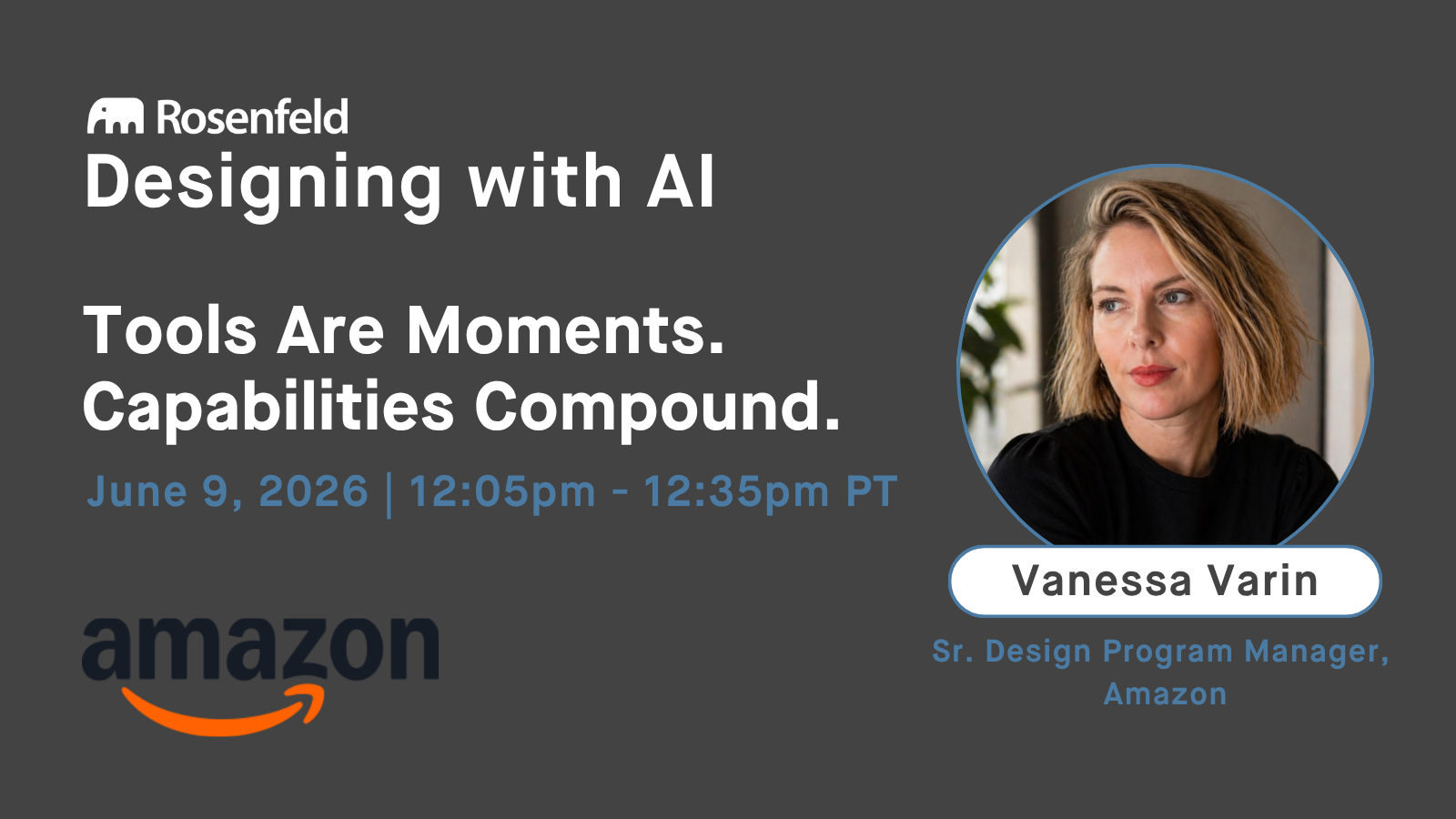
Tools are moments. Capabilities compound.

Summary
This talk explores a new approach to AI readiness for design organizations: moving beyond tool proficiency to identify the underlying skills, competencies, and capabilities that scale across changing technologies. We’ll examine the distinction between skills and capabilities, the process of building an AI capability framework for design, and how we’re mapping designers against those competencies to establish a baseline and path forward.
This session offers a practical, human-centered model for building resilient, AI-augmented design organizations — grounded in durable capability, not temporary tooling trends.
















More Videos

"Inclusion and accessibility are really core and important to what we do in design ops."
Saara Kamppari-MillerTheme Three Intro
October 4, 2023

"You don’t design interfaces anymore—you choreograph intentions."
David SternbergUncovering the hidden forces shaping user behavior
July 17, 2025

"It’s not always a charismatic repository that people flock to, but tools that seek you out where you work are more effective."
Ned Dwyer Emily Stewart James WallisThe Intersection of Design and ResearchOps
September 24, 2024

"There’s this friction of being a servant leader in a leadership position."
Meredith Black Elyse HornbacherBuilding Community and Common Trends to Look for in 2021
December 17, 2020

"We have weekly meetings with implementation teams to design APIs, discuss progress, and address issues to ensure alignment."
PJ Buddhari Nate BaldwinMeet Spectrum, Adobe’s Design System
June 9, 2021

"Being nice and empathetic at the executive level is critical to get results and maintain trust."
Ted NewardTheme 4: Enterprise Organizational Journey
June 4, 2019

"The act of naming, organizing, structuring information is itself a foundational design decision plan for the future."
Sean Baker Sara RomanoskiWeaving Knowledge Management into the Fabric of Our Design Practice
September 11, 2025

"How might your team maintain its resilience through constant change?"
Kristin SkinnerTheme 2: Introduction and Provocation
January 8, 2024

"Design ideas come back around again and again, waiting for leadership or new contexts to take root."
Kara KaneTheme One Intro
November 16, 2022