Log in or create a free Rosenverse account to watch this video.
Log in Create free account100s of community videos are available to free members. Conference talks are generally available to Gold members.
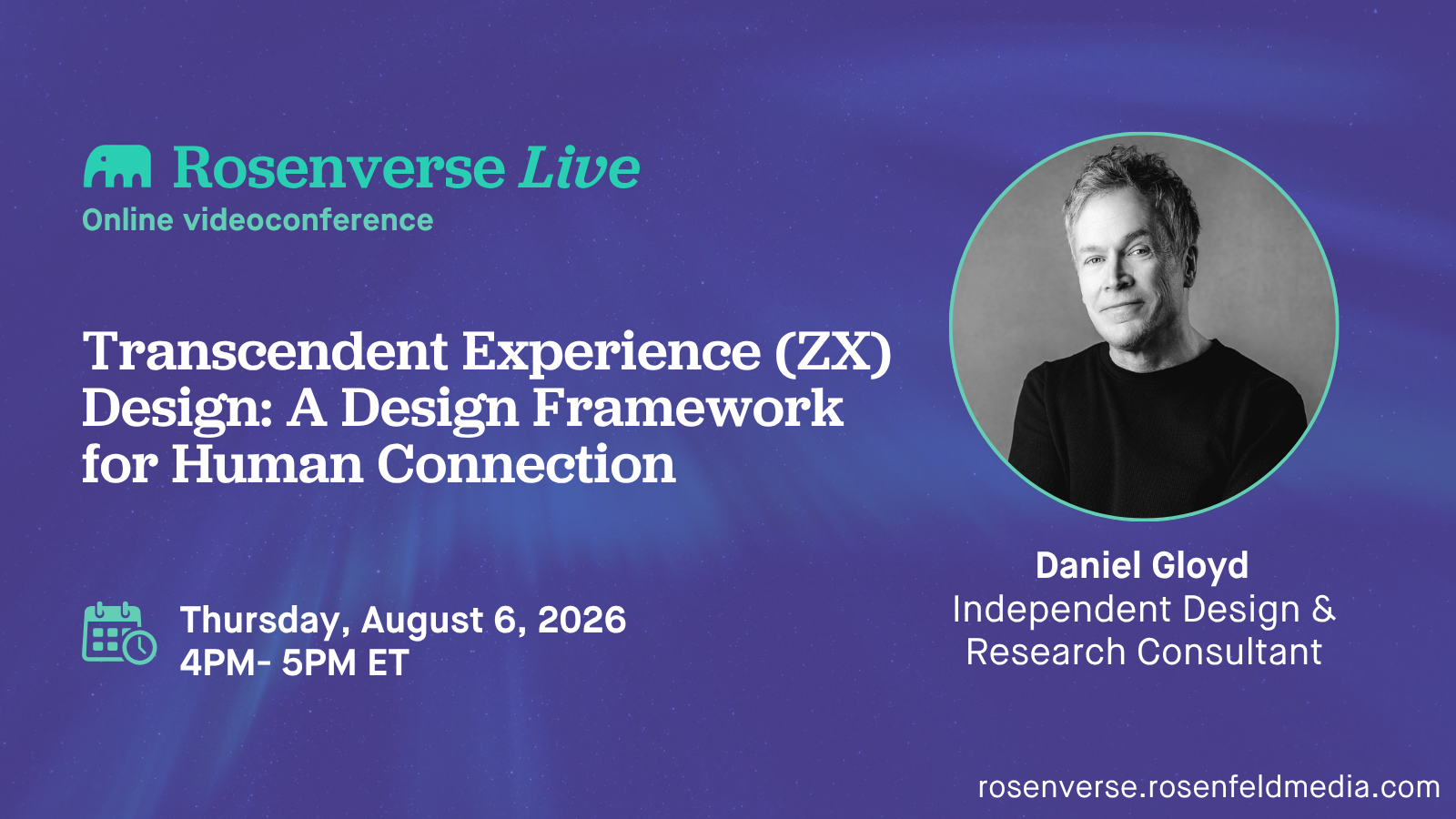
Transcendent Experience (ZX) Design: A Design Framework for Human Connection
This video is featured in the UX Watch Party playlist.

Summary
Key Insights
-
•
Transcendent Experience design (ZX) expands UX focus from individual user tasks to fostering interconnected relationships with others, community, and the environment.
-
•
Warmth in design emerges through three movements: being seen (vision), scaffolding self-actualization (power), and belonging to a shared cause (heart).
-
•
Abraham Maslow's late work on Theory Z identifies self-transcendence as the pinnacle of human experience, inspiring ZX design.
-
•
Traditional UX often optimizes for efficiency but misses cultivating belonging, gratitude, and reciprocity essential for human flourishing.
-
•
The Shakers exemplified designing warmth by intentionally embedding interconnectedness in their physical environment and community practices.
-
•
The Braver Collective online community models ZX by creating safe spaces for survivors to share stories, feel seen, and belong, using structured feedback mechanisms.
-
•
Designers face structural and legal barriers integrating warmth and community connection, such as confidentiality concerns in sensitive domains like finance and trauma.
-
•
Language is critical; having a shared vocabulary around warmth and connection enables designers and organizations to discuss and prioritize these intangible qualities.
-
•
There is increasing organizational appetite for warmth in design as a differentiator, especially amid automation and design outsourcing pressures.
-
•
Measuring warmth and transcendence in UX is possible and increasingly necessary, though methods are still emerging and blend art with science.
Notable Quotes
"UX design has become very good at serving individuals, but what if we're optimizing for the wrong things?"
"Warmth is a connecting principle that emerges from transcending self and attending to the world outside our own skin."
"Designers should ask, what kinds of relationships is the system I’m working on helping to create or support?"
"The Braver Collective’s structured interactions are literally built around being seen and being heard."
"Self-actualization often involves taking negative experiences and turning them into contributions that benefit others."
"The ultimate responsibility of design is not merely to shape experiences but to support the relationships through which people become who they are."
"Many designers feel anxious today, wondering what makes them special beyond tools like AI or design systems."
"Warmth can be designed, as the Shakers did in their villages, embedding interconnectedness into physical space."
"We don’t thrive individually or collectively without the warmth that emerges from meaningful connection."
"Language gives us the words to talk about warmth, and that’s the birth of these ideas spreading within organizations."
Or choose a question:
















More Videos

"AI can help us cut through noise and speed up the so-what part of insights but can’t replace human knowledge of strategy and customers."
Michelle Bejian Lotia Anne-Marie MorellRolling Out a Repository: How Zapier Centralizes Insights from Across their Organization
March 28, 2023

"The intelligence is woven into the interface itself, creating presence and personality without pretending to be human."
Josh Clark Veronika KindredSentient Design: Crafting Intelligent Interfaces with AI
June 9, 2026

"Carol was really grateful for our conversation."
Randolph Duke IIWar Stories LIVE! Randy Duke II
March 30, 2020

"Sometimes the fires need to burn; saying no today doesn’t mean you can’t solve it down the line."
Dominique WardThe Most Exciting Time for DesignOps is Now
September 8, 2022

"Lots of service design has been happening but in disguise and not called that."
Andy Polaine Lavrans LøvlieWhat is the role of service design in product-led organizations?
December 3, 2024

"You’re objectifying you when you say I love you. Love is oneness, not separation."
Himanshu BharadwajIf design had a heart
April 16, 2026

"How you manage vision in your ops team, especially when it’s new or lacking, is key for ongoing success."
John Calhoun Rachel PosmanBring your DesignOps Story to Life! The Definitive DesignOps Book Jam
October 3, 2023

"Research operations can and should be engines of strategic influence."
Christopher GeisonTheme 1 Intro
March 25, 2024

"Our journey into Wonderland has been wild, wonderful, and requires constant reflection and looking outward for inspiration."
Carla Casariego Sarah SpencerDesignOps in Wonderland
October 24, 2019