Log in or create a free Rosenverse account to watch this video.
Log in Create free account100s of community videos are available to free members. Conference talks are generally available to Gold members.
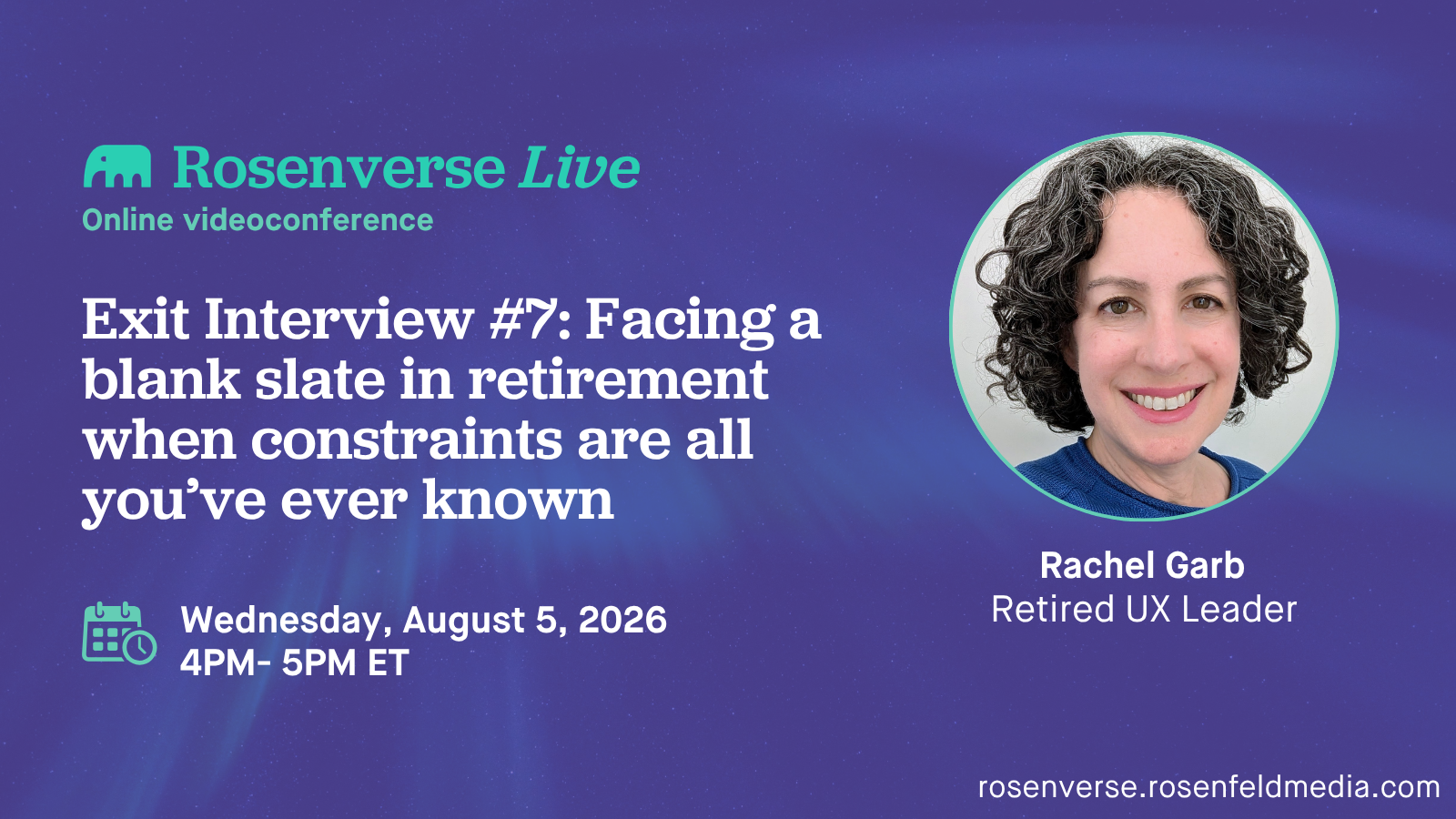
Exit Interview #7: Facing a blank slate in retirement when constraints are all you’ve ever known

Summary
After three decades, Rachel retired in 2023, craving more freedom and control. But once she had it in spades, she didn’t know what she wanted to do with it.
She's still figuring it out, but three years in, she’s found new friends outside of tech, is more physically active than ever before, volunteers in her community, travels several times a year, and has completed a few big projects including publishing her first book.
Tune in for a conversation about Rachel’s transition into retirement, including how she knew it was time, strategies that helped her move beyond the blank slate, and what she wished she’d known beforehand.
Key Insights
-
•
A career in UX at big tech involves enduring constant constraints, slow progress, and multiple stakeholders, requiring the acceptance of limited autonomy to impact millions.
-
•
Fluid intelligence peaks in midlife and then declines, prompting a shift towards leveraging crystallized intelligence in career pivots.
-
•
Rachel transitioned from hands-on design to organizational leadership roles, emphasizing synthesis, advising, and relationship-building over pure creative output.
-
•
Repeated reorganizations within large companies greatly impact employee energy, motivation, and career decisions.
-
•
A financial advisor can fundamentally change one's perspective on retirement feasibility and timing.
-
•
UX skills are transferable and valuable outside traditional tech roles, serving as problem-solving superpowers in other industries.
-
•
Managing personal constraints and being intentional with time and energy are crucial after leaving structured work environments.
-
•
Writing a small, focused book can serve as a manageable and rewarding 'side project' post-career rather than embarking on large commitments.
-
•
AI, while a disruptive force, was not a direct motivator for Rachel’s exit but has become an important tool she uses in creative and practical ways.
-
•
Workplace AI adoption often suffers from leadership pressure without clear guidance, causing employee struggle with unclear mandates.
Notable Quotes
"I always said I'm not good with blank slates. I had to develop my own constraints after leaving structured work."
"The hardest part was losing my identity of being someone who works in tech after so many years."
"When constraints are all you’ve ever known, moving fast and breaking things just isn't possible."
"Fluid intelligence peaks and then declines; that's when we should lean into crystallized intelligence—organizing, synthesizing, sharing."
"I wasn’t drawn to product work anymore because the fluid intelligence needed to navigate it felt out of reach."
"UX skills are like secret superpowers you bring to any job, even if it’s a small company or non-tech field."
"I made a snap decision that I needed a break and to leave because the constant reorganizations were exhausting."
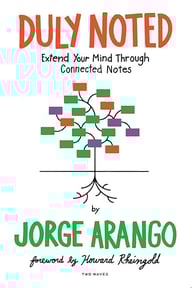
"I didn't want to work full-time again right away, so I wrote a short book to experiment with what was next."
"AI helps me bounce ideas and do practical things, but it doesn't do the writing or the creative work for me."
"Leadership often pressures teams to integrate AI without explaining why or how, which leads to confusion and frustration."
Or choose a question:














More Videos

"You have to ask specific, very precise questions, not big general ones, to get useful AI results."
Karen McGrane Jeff EatonAI for Information Architects: Are the robots coming for our jobs?
November 21, 2024

"We treat our stakeholders as customers to understand their scenarios and align on a shared north star principle."
Cheryl PlatzDemystifying Multimodal Design: The Design Practice You Didn't Know You're Doing
April 4, 2024

"The yellow 80% allocation guide reminds that designers shouldn't be expected at full 100% project time due to meetings and breaks."
Kristin Sundermeyer Tygre MorehartDesign Ops Metrics
September 30, 2021

"Design thinking is really just a set of methodologies; there’s really no thinking in design thinking."
Christian BasonExpand—Rethinking Design for Public Challenges
September 14, 2022

"Mutual benefit and agreement on the definition of success upfront are critical to long-term team effectiveness."
Michael PolivkaScaling Design through Relationship Maps
November 7, 2017

"I literally would have to jump up in meetings to introduce myself as the director just to be recognized."
Lisanne NormanWhy I Left Research
March 27, 2023

"If you have a realistic roadmap and action plan, you can identify what one thing you can do now to move UX maturity forward."
Susan WeinschenkEvaluating the Maturity of UX in Your Organization
January 15, 2020

"Web compatibility idiosyncrasies are not widely documented or officially communicated; people learn through word of mouth or trial and error."
Sharon BautistaTime to Make the Donuts: How User Research Helped Bridge Disparate Teams
January 8, 2024

"Imagine a world where the government prototypes and iterates the whole time."
Sofía Delsordo Kassim VeraPublic Policy for Jalisco's Designers to Make Design Matter
December 8, 2021